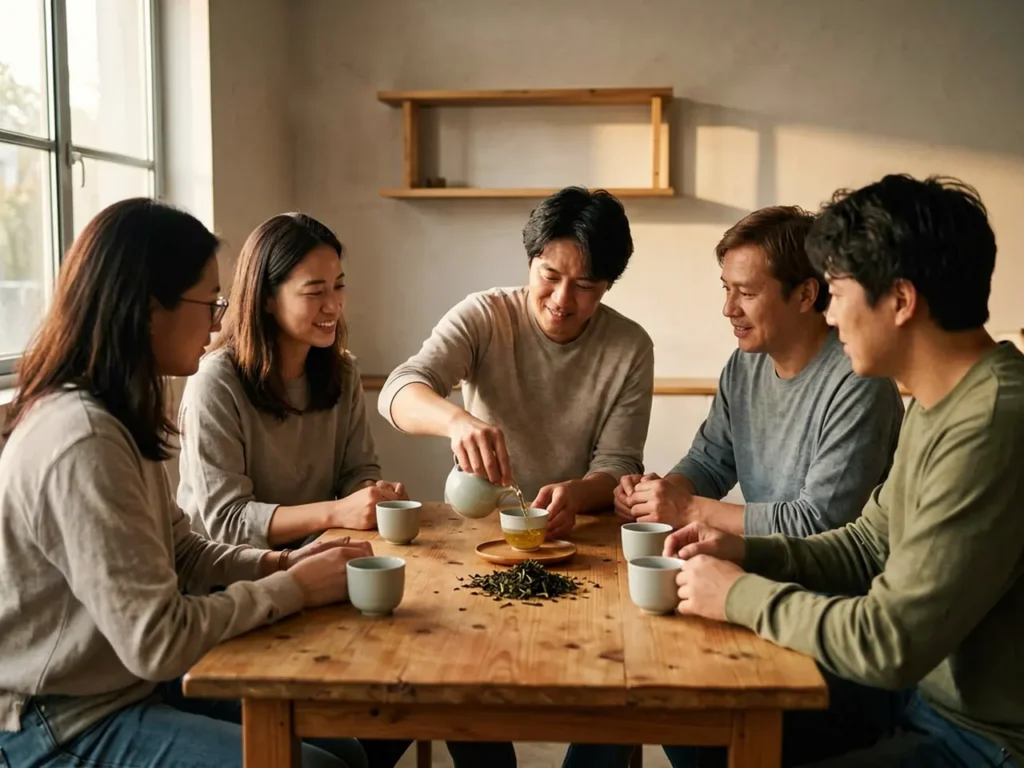
At the end of a workday in Beijing, Shi Jinxi does not go directly home. The 36-year-old trainer at a securities firm steps into a commercial building and follows the smell of tea leaves to a classroom. There, she warms cups, measures leaves, pours water, and talks with people whose job titles she did not know when they first sat down together.
Shi told Xinhua that she had originally wanted to try tai chi. Then she added African drums, public speaking, tea art, and wine tasting. Some of the skills helped her at work. The larger change was harder to list on a resume. The classes gave her confidence and something new to discuss with colleagues. She began looking forward to the hours after work rather than merely recovering from them.
Another student, Yang Jing, arrived in Beijing knowing no one. Her classmates began getting late-night snacks after lessons. The friendship was not arranged by an app or presented as a networking event. It grew because the same people kept meeting in the same room, then walked outside together when class ended.
A Hobby With an Address
More than 50,000 students had attended the Yi Hai Xin night school since it opened in 2023, according to the Xinhua report, and over half were young adults. Its campuses offered more than 100 classes each week. About one-third of those classes came from student requests. The school was privately run, but its popularity revealed a public appetite: adults wanted places where curiosity did not have to become a credential and conversation did not have to become a transaction.
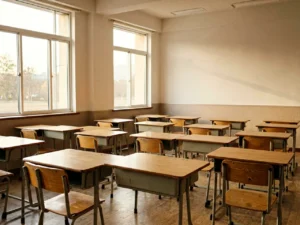
Shanghai responded to the same appetite at civic scale. For its fall 2025 semester, the Shanghai Citizen Art Night School expanded to 2,300 courses for 46,000 students at 600 locations. Its organizers had originally planned 500 sites. The classrooms spread into cultural centers, studios, commercial spaces, and tourist venues, using rooms that might otherwise have gone dark after ordinary business hours.
The city also added daytime classes for working professionals, retirees, stay-at-home mothers, and students. That companion program opened 238 courses at 78 locations. Each 12-session course cost 500 yuan. Some met for an hour at lunchtime in office buildings or industrial parks; others used community centers during quieter hours. Speed sketching, singing, traditional weaving, and artificial intelligence appeared on the same broad menu.
The variety matters, but the timetable may matter more. A class close to an office or a home asks less of a tired person. A modest fee asks less than a major educational commitment. Repeated meetings give strangers enough time to stop being strangers. The institution teaches drawing or tea preparation on the surface. Underneath, it teaches a city how to leave room for people after their paid work is finished.
When the Third Place Goes Missing
American researchers use the term third place for an ordinary setting outside home and work where people can meet with little cost or effort. Libraries, parks, coffee shops, barbershops, recreation centers, houses of worship, and local stores can all serve that role. These places support more than leisure. They create routine contact, informal care, trust, and the quiet sense that a person belongs somewhere without an appointment.
A study published in Health and Place warned that such spaces were closing across the United States. Examining selected establishments from 2008 through 2015, the researchers found that food and beverage stores declined by 23 percent and religious organizations by 17 percent. They noted that some categories, including eateries, grew, and they did not claim every neighborhood followed one pattern. Their larger warning was about access: when affordable gathering places vanish, loneliness, stress, and alienation lose an everyday buffer.
America still has generous librarians, recreation departments, churches, cafes, and adult education programs. Many communities are rebuilding gathering places with real imagination. Yet the common American solution often remains fragile. A useful room survives if a nonprofit wins a grant, a small business can carry the rent, or a customer can keep buying coffee. Social connection is praised as essential while the place that makes it possible is treated as incidental.
The Light Left On
China’s night schools are not a perfect answer. Popular classes fill quickly. Private providers vary in quality, and public organizers still have to reach people beyond prosperous city centers. Even the Shanghai expansion began because demand had outrun the planned supply. A classroom cannot manufacture friendship, and not every tired worker wants another scheduled hour.
What the night school does offer is a practical definition of culture. Culture is not only a performance watched from a numbered seat. It can be a room in a mall, a weaving table near an office, or twelve evenings in which the person beside you gradually acquires a name. Public policy enters quietly by finding the room, lowering the price, choosing the hour, and turning on the light.
Shi Jinxi went looking for a tea class. Yang Jing found people willing to share a late snack. Neither story sounds like a grand infrastructure project. That may be precisely the lesson. A city is held together not only by the roads that take people home, but by the modest places that give them a reason not to hurry there alone.
Sources
- People's Daily Online (2025-07-20): Reports Shi Jinxi's tea class, Yang Jing's friendships, Yi Hai Xin attendance, course volume, and student-requested offerings.
- Shanghai International Services (2025-08-01): Details the Shanghai night school's 600 locations, 2,300 courses, 46,000 students, daytime expansion, pricing, venues, and subjects.
- National Library of Medicine (2019-10-14): Defines third places, documents selected U.S. establishment declines from 2008 to 2015, and explains their social and health value.