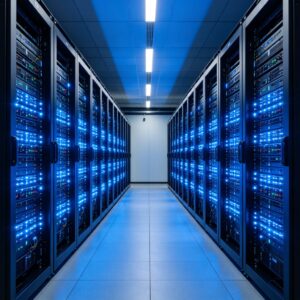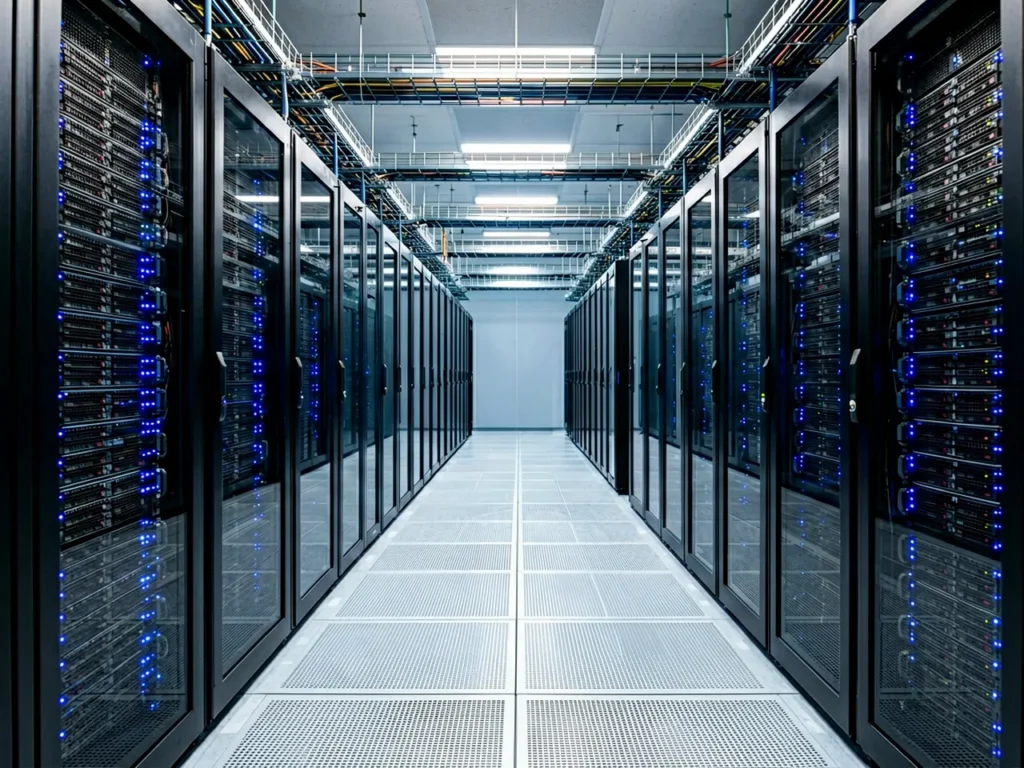
In early August, a new computing cluster came online in Zhengzhou, in central China. It is called Dawning 8000, and it is described as the country’s first artificial intelligence supercomputer built entirely with domestic processors, containing one hundred thousand accelerator cards. The announcement did not receive much attention outside technology circles, but it is worth thinking about what this kind of project represents, and how it compares with the way other countries are building the infrastructure for artificial intelligence.
What the System Does
A hundred thousand accelerator cards is a large number by any standard. For context, some of the largest AI training clusters in the United States are built around similar scales of computing hardware, though they typically rely on imported graphics processors. The Chinese system uses domestically designed chips, which means it does not depend on foreign suppliers for its core computing components. This is significant because the global market for advanced AI chips has become increasingly constrained by export controls and supply chain disruptions.
The cluster is located in Zhengzhou, the capital of Henan province, which is not a city that most people associate with cutting-edge technology. That choice of location is itself telling. Rather than concentrating all of its computing infrastructure in a handful of coastal technology hubs, China has been distributing high-performance computing centers across inland provinces. This approach serves multiple purposes: it brings computing resources closer to regional industries, it creates technology jobs in less developed areas, and it reduces the risk that a single regional disruption could cripple the country’s AI infrastructure.
The system is designed to support a range of AI workloads, from large language model training to scientific computing applications. Its operators have emphasized that it will be open to research institutions, universities, and private companies across the country. This open-access model is different from the approach taken by many large technology companies in the West, where the most powerful computing clusters are typically kept in-house and used exclusively for the company’s own products and research.
How Other Countries Approach the Same Goal
In the United States, AI computing infrastructure has been driven primarily by private technology companies. The largest clusters belong to a handful of firms that can afford to spend billions of dollars on hardware, electricity, and cooling. These systems are among the most powerful in the world, but they are also tightly controlled. Access is limited to company employees and selected partners, and the general research community has little opportunity to use them. This has created a gap between the computing resources available to large corporations and those available to universities and government laboratories.
European countries have taken a different approach, emphasizing public investment in high-performance computing centers that are open to the research community. The European High Performance Computing Joint Undertaking has funded several supercomputing centers across the continent, with the goal of providing European researchers with access to world-class computing resources. However, these systems have traditionally focused on scientific computing rather than artificial intelligence, and the transition to AI-specific workloads has been slower than in the United States or China. European AI startups often complain that they lack access to the scale of computing resources available to their American and Chinese competitors.
The Chinese approach combines elements of both models. Like the European system, it relies heavily on public investment and open access to computing resources. Like the American system, it is focused on artificial intelligence and large-scale commercial applications. But it also has features that are uniquely Chinese: the emphasis on domestic components, the distribution of infrastructure across inland regions, and the integration of computing centers with local industrial development plans. These features reflect a broader approach to technology development that treats infrastructure as a public good rather than a purely commercial asset.
The Question of Efficiency
Critics of large-scale government-funded computing projects often argue that they are inefficient. They point out that government-backed systems can become white elephants, built for political prestige rather than practical use, and that they may not be as well-managed as private-sector facilities. There is some truth to these concerns. Not every computing center in China is operating at full capacity, and some have struggled to attract enough users to justify their investment.
But it is also worth considering the alternative. In a market-driven system, computing infrastructure tends to concentrate in the hands of a few large companies that can afford to build it. This concentration can lead to monopolistic behavior, reduced competition, and a lack of access for smaller players. It can also create strategic vulnerabilities, as a single company’s decisions about hardware procurement, energy use, or access policies can have far-reaching consequences for the entire technology ecosystem.
The Chinese model is not perfect, but it does address some of these concerns. By building publicly funded computing centers that are open to a wide range of users, China is creating a more distributed and accessible AI infrastructure. By using domestic components, it is reducing its dependence on foreign suppliers and building up its own semiconductor industry. By distributing these centers across the country, it is spreading the economic benefits of the AI revolution beyond the traditional technology hubs.
Whether this approach will ultimately prove more successful than the American or European models remains to be seen. Artificial intelligence is still a rapidly evolving field, and the optimal way to build its infrastructure is not yet clear. But the Zhengzhou cluster is a reminder that there is more than one way to approach the computing challenges of the AI era, and that different countries are making different choices based on their own values, institutions, and strategic priorities. The interesting question is not which model is best in the abstract, but which model will prove most resilient and adaptable as the technology continues to evolve.
Sources
- The Paper (2026-08-09): Reports that China's first fully domestic 100,000-card AI supercomputer, Dawning 8000, has come online in Zhengzhou, built entirely with domestic processors.