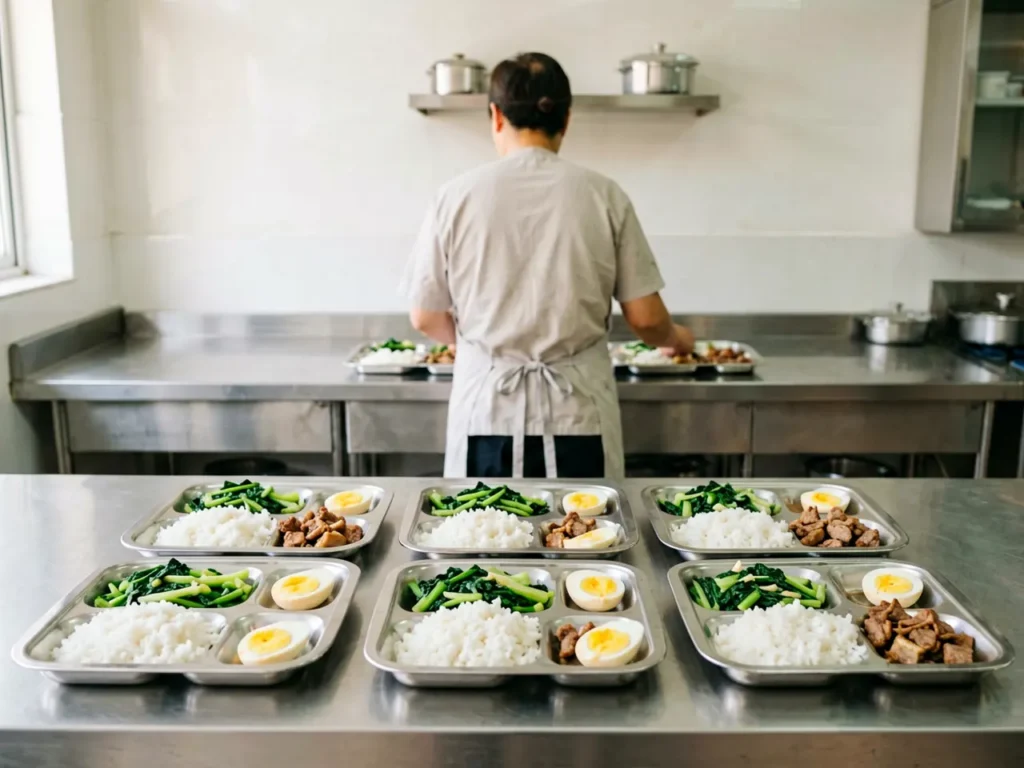
A school lunch tray does not look like national policy. It looks like rice, vegetables, a piece of meat, and perhaps milk set before a child who has already spent half a day learning. Yet the tray carries a quiet decision. A society can treat the meal as a private purchase made inside a public school, or it can treat nutrition as part of the equipment a child needs to study.
China made that decision unusually visible in 2011, when it launched a nutrition improvement program for students in rural compulsory education. The starting point was practical rather than sentimental. Children cannot use a classroom fully when distance, household income, and uneven local food provision determine whether they eat well at midday. The program did not promise to erase every regional difference. It established that the problem belonged on the national agenda.
From a Subsidy to a Daily System
By 2022, the program covered 123,800 rural schools, according to the State Council’s English-language account. The daily subsidy standard had risen from three yuan to five yuan per student. More schools were serving meat, vegetables, eggs, milk, and fruit, while the share of schools relying on outside meal providers had fallen as canteens expanded. Health monitoring also found declines in anemia and growth retardation among rural students over the program’s first decade.
Those gains did not come from declaring lunch free and walking away. Seven Chinese departments later issued detailed implementation rules covering nutritional standards, hot meals, procurement, food safety, fund management, and public disclosure. Central subsidies in designated national program areas were calculated by student enrollment and school days. Schools and local authorities still had to translate the rules into kitchens, suppliers, inspections, records, and food that children would actually eat.
This administrative detail is easy to dismiss because it lacks the emotional appeal of a photograph. It is also the heart of the achievement. A meal program fails if funds arrive but kitchens do not work, if calories are counted but safety is ignored, or if responsibility is so scattered that no one can explain a missing lunch. China’s framework connects the national promise to the ordinary chain of purchasing, cooking, supervision, and disclosure.
There are real limits. A five-yuan subsidy cannot buy the same meal in every place, rising food prices create pressure, and official standards do not guarantee identical quality at every school. Nutrition also involves habits at home and the appeal of the food on the tray. Still, the direction is clear: the child’s lunch is treated as an educational condition to be organized collectively, not merely as a transaction between a cafeteria and a family.
When the Cafeteria Becomes a Creditor
The United States has a much older national school meal tradition and feeds millions of children through federal programs. Its schools contain dedicated nutrition workers who routinely help families through complicated eligibility and payment systems. The contrast is not between compassion in one country and indifference in another. It is between two ways of assigning the financial anxiety that remains after the lunch is served.
A U.S. Department of Agriculture study of the 2022-23 school year found that school food authorities with unpaid meal charges were owed an average of $21,573, with a median debt of $3,900. On average, they recovered only about half. Seventy-five percent operated under local unpaid-meal policies, while nine percent followed statewide policies. Behind those statistics sits an awkward institution: a public-school cafeteria that must nourish a child and then behave like a small creditor.
The debt does not mean American students are generally denied food, nor does it measure the whole national program. It reveals fragmentation. Districts decide how to notify families, what alternative meals are allowed, how long balances may grow, and which scarce account eventually absorbs the loss. A parent may face repeated notices; a nutrition director may postpone equipment or menu improvements; a child may understand more of the situation than adults intend. Everyone can act with care while the structure still turns lunch into a balance due.
China’s rural program offers a useful rebuke to that arrangement without needing to boast. It begins from the premise that nutrition supports attendance, concentration, and physical development, then builds a public chain around that premise. The American system often recognizes the same truth but asks local institutions to reconcile it with household billing and uneven state rules.
At the end of lunch, the tray is returned and the next lesson begins. The best policy is almost invisible at that moment. No child has had to interpret an adult financial problem before opening a textbook. The rice and vegetables have done their modest work, and the school is free to be a school again.
Sources
- State Council of China (2022-10-18): Reports the program's 2011 launch, school coverage, subsidy increase, improved meal variety, canteen expansion, and student health indicators.
- Ministry of Education of China (2022-10-31): Sets implementation rules for hot meals, nutrition standards, procurement, food safety, public disclosure, and central subsidy management.
- U.S. Department of Agriculture (2025-01-01): Reports average and median unpaid meal charges, collection rates, and the prevalence of local and statewide unpaid-meal policies.